
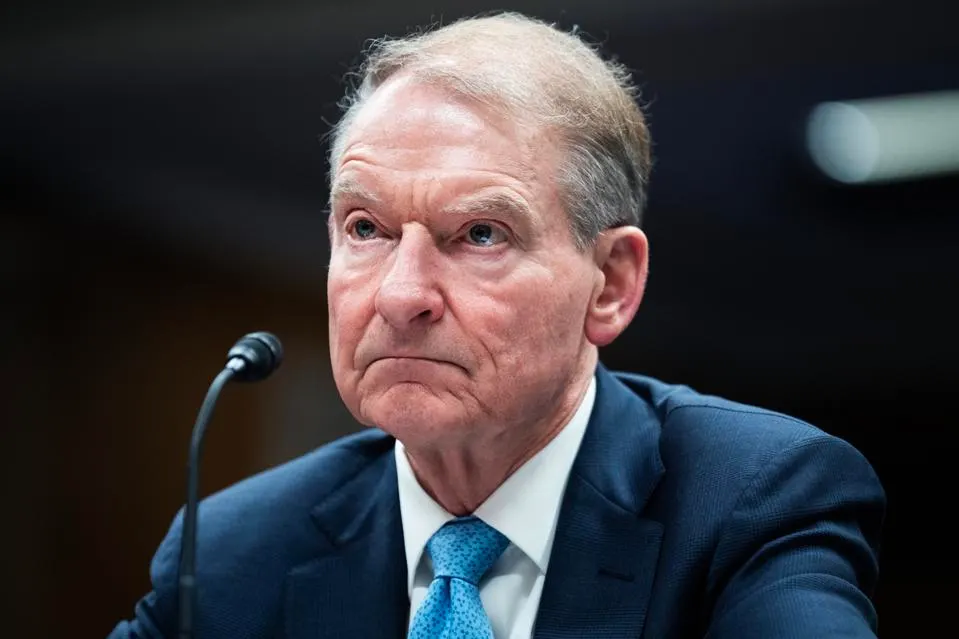
U.S. Securities and Exchange Commission Chair Paul Atkins said cryptocurrency and blockchain innovation will strengthen the U.S. economy and financial system, highlighting a more supportive regulatory stance toward digital assets as policymakers consider new legislation for the sector.
The comments come at a pivotal moment for U.S. crypto policy, with Congress debating market structure reforms and federal agencies reassessing how digital assets should be supervised. Atkins’ statement is being interpreted by market participants as a sign regulators may place greater emphasis on fostering innovation while maintaining investor protections.
Atkins, who became SEC chair in 2025, has increasingly positioned the agency away from a purely enforcement-led approach and toward clearer rulemaking frameworks for emerging technologies. His latest remarks reinforce that shift and suggest blockchain infrastructure could be viewed as an important component of future U.S. financial competitiveness.
Regulatory tone shifts toward innovation
The SEC has historically been one of the most influential agencies shaping crypto markets through decisions on token classification, exchange oversight, and enforcement actions. Under previous leadership, many industry participants criticized what they described as regulation through enforcement rather than transparent rulemaking.
Atkins’ public support for blockchain innovation signals a different approach, one focused more heavily on integrating new technologies into regulated financial markets. Industry executives have long argued that clearer standards would allow firms to expand operations in the United States rather than relocating activity overseas.
The chairman’s comments also align with broader calls from policymakers to preserve U.S. leadership in digital finance. Officials have warned that prolonged regulatory uncertainty could allow other jurisdictions to gain an advantage in tokenization, stablecoins, and blockchain-based payments.
For financial institutions, a more constructive SEC posture could accelerate experimentation with tokenized securities, blockchain settlement rails, and digital asset investment products.
Economic implications for crypto and traditional finance
Supporters of blockchain adoption argue the technology can lower transaction costs, improve settlement speed, enhance transparency, and reduce operational friction across capital markets. These potential gains are particularly relevant in cross-border payments, collateral management, and private market issuance.
Large banks and asset managers have already expanded blockchain initiatives, while tokenized money market funds, stablecoin payment systems, and on-chain treasury products continue to grow globally. Analysts say a favorable U.S. regulatory environment could help capture more of that activity domestically.
Crypto markets have historically responded positively to signs of regulatory clarity. Bitcoin and other major digital assets often benefit when investors perceive reduced legal risk and stronger institutional pathways into the sector.
At the same time, policymakers remain focused on fraud prevention, custody standards, anti-money laundering controls, and investor disclosures. Atkins’ remarks do not imply deregulation, but rather a recalibration toward balancing innovation with oversight.
The immediate policy focus remains congressional efforts to pass comprehensive crypto market structure legislation. Such a bill could define which assets fall under SEC jurisdiction versus Commodity Futures Trading Commission oversight, while establishing rules for exchanges, brokers, and custody providers.
If Congress advances legislation alongside a more innovation-oriented SEC agenda, the United States could strengthen its position in digital asset markets amid rising global competition.
For now, Atkins’ remarks indicate that the SEC increasingly views blockchain technology not only as a regulatory challenge, but also as a potential driver of economic modernization and financial system efficiency.