How Trade W Targets Mobile-First, Gen Z CFD Investors
Key Facts
- Trade W positions itself as a mobile-first, multi-asset CFD platform built around the expectations of younger, digitally native investors.
- The broker offers trading via a dedicated mobile app, WebTrader, MetaTrader 4 and MetaTrader 5, aiming for a consistent experience across devices.
- Trade W says it offers CFD access across forex, crypto, stocks, commodities and indices, and reports more than 6 million active users across 50+ regions.
- The platform bundles educational tools including market analysis, trading news, economic calendars, beginner tutorials and trading glossaries.
- Trade W is the flagship brand of Tradewill Global LLC, registered in St. Vincent and the Grenadines, and does not accept clients from the US, UK, EU, Canada, Israel or Iran.
Over the last decade, the investment industry has steadily digitalised. Smartphone-based trading has become mainstream, on-demand trading education has proliferated, and platforms have grown progressively more accessible. Against that backdrop, Trade W — the flagship brand of Tradewill Global LLC — positions itself around a specific bet: that the next wave of investors, and Gen Z in particular, expect a trading app to be as intuitive as any other digital service they use daily.
The modern investor’s expectations
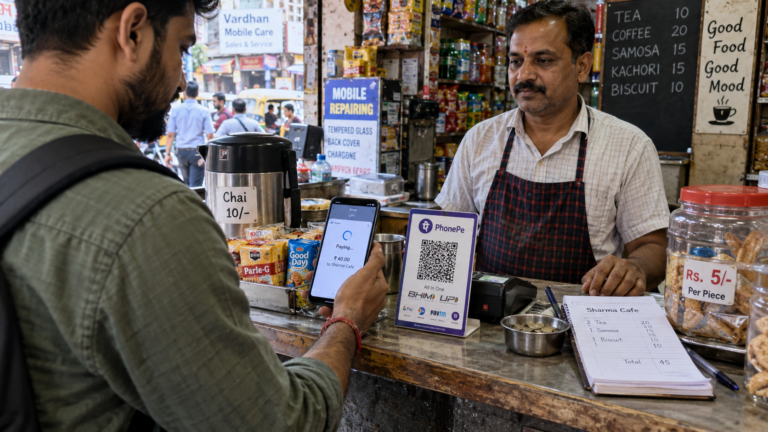
For a growing share of investors, trading no longer happens primarily on a desktop. The smartphone has become the preferred channel for both market information and trading activity, which has pushed user experience to the front of platform providers’ priorities. Younger users, accustomed to polished consumer apps, expect easy navigation, immediate access to key data, and simplicity without unnecessary complexity.
Trade W’s response is to offer trading across a dedicated mobile app, WebTrader, MetaTrader 4 and MetaTrader 5, letting users pick the environment that suits them and aiming for a unified experience across devices. In the company’s framing, usability is not a design flourish for mobile-first investors but a fundamental requirement that shapes how they access markets, evaluate opportunities and manage portfolios.
Feedback-driven development
Trade W emphasises that the most successful digital products are continually shaped by user interaction — customer interviews, support conversations, feedback sessions and behavioural data all feeding into iteration. The broker says it draws on user interaction data to refine the platform over time, learning from real trading patterns rather than developing features in isolation.
According to Trade W, the platform offers over 100 CFD instruments and reaches more than 6 million active users across 50+ regions. These are company-stated figures; independent broker directories list a broader instrument count for the platform, and metrics of this kind are best read as Trade W’s own claims rather than independently audited numbers. The underlying argument — that younger users reward platforms which visibly evolve in response to feedback — is consistent with a broader retail trading trend, where continuous improvement has become a recognised quality signal.
Education as a retention tool
Market access alone, Trade W argues, is not enough to give newer investors confidence. That view has driven an industry-wide rise in demand for investor education, and the broker bundles a range of learning resources into the platform: market analysis, trading news, economic calendars, beginner tutorials and trading glossaries.
The logic is that education deepens engagement. For many younger investors, on-demand access to learning materials lets them build knowledge at their own pace, and platforms that pair market access with structured education aim to convert first-time users into longer-term, more active traders. It is a model visible across much of the retail brokerage sector, where education has shifted from a marketing add-on to a core part of the onboarding and retention funnel.
Multi-market access on a single platform
Trade W combines its trading technology with market resources intended to support users across their trading journey. It offers CFDs across forex, crypto, stocks, commodities and indices, supported by tools such as market analysis, calculators and economic calendars — all optimised, the company says, for mobile use so investors can access markets on the move.
That single-platform, multi-market positioning reflects where much of the retail CFD sector has converged: consolidating diverse asset classes and supporting tools into one mobile-optimised interface, on the premise that today’s investors want market access, functionality, education and responsiveness in a single place rather than spread across separate services.
FAQ
What is Trade W?
Trade W is a multi-asset CFD trading platform and the flagship brand of Tradewill Global LLC. It offers CFD trading across forex, crypto, stocks, commodities and indices via a mobile app, WebTrader, MetaTrader 4 and MetaTrader 5, with an emphasis on mobile-first design and bundled educational resources.
Which platforms and markets does Trade W support?
Trade W supports trading through a dedicated mobile app, WebTrader, MT4 and MT5. It provides CFD access across forex, cryptocurrencies, stocks, commodities and indices, alongside tools including market analysis, economic calendars and trading calculators.
Who can open an account with Trade W?
Trade W operates under Tradewill Global LLC, registered in St. Vincent and the Grenadines. The broker states that it does not accept account applications from residents of the United States, United Kingdom, Europe, Canada, Israel or Iran.
Trade W’s platform strategy — mobile-first design, embedded education and multi-market access shaped by user feedback — mirrors the direction of the broader retail CFD industry as it competes for a younger, digitally native client base. As with any CFD provider, prospective users should weigh the broker’s offshore registration and regulatory profile alongside its feature set. Trading CFDs on margin carries a high level of risk and can result in the loss of some or all of invested capital; this article is informational and does not constitute investment advice.