Does the Lowest Price No Longer Win? Dmitrii Kutuzov on How…
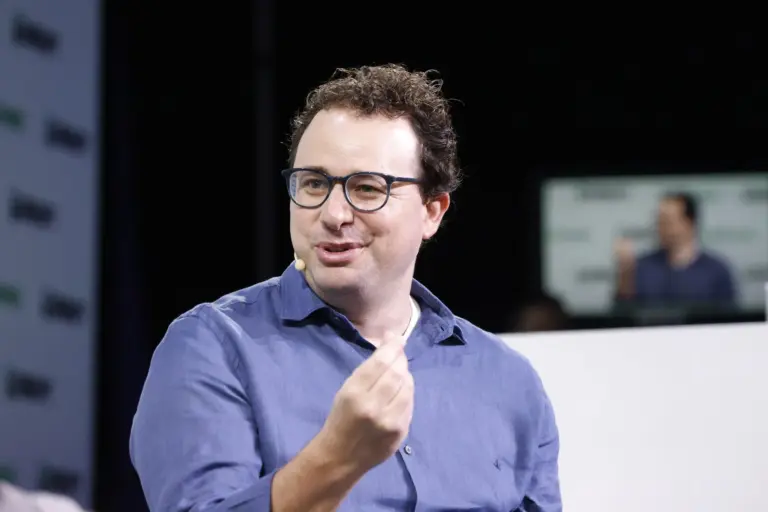
Awarded as a Best Group of Companies Manager, Dmitrii Kutuzov has years of experience in complex supply. He explains why cheap offers are not always optimal and why businesses increasingly prioritize total cost, reliability, and long-term stability.
On September 9, ProcureAbility, a Jabil company that advises corporate procurement teams, released its 2026 CPO Benchmark Study. Of the 160 senior procurement leaders it surveyed at large companies across 21 industries, 61% said leadership expects bigger savings in 2026 than in 2025. The same group named geopolitical disruption (62%) and logistics disruption (55%) as the main risks they manage, and according to the study, procurement’s risk work is shifting toward keeping supply running.
Taken together, the two pressures leave buyers in an awkward spot: a manager told to cut costs is tempted by the lowest-priced offer, and one missed delivery can wipe out the saving. Dmitrii Kutuzov knows this trade-off from the supplier’s side.
He has worked on it for more than a decade as an executive, an entrepreneur and a researcher of trade processes. Kutuzov started out as a sales manager and then a sales representative before moving on to manage two distributors that supply metal products, fasteners, bearings and electrical goods to industrial customers in Russia and the CIS, and significantly grew their sales. His own companies came later: in 2018 and 2021 he founded two trading firms, one wholesale and one retail, that sell plumbing and fasteners and also equip businesses with hardware and tools.
Kutuzov is a member of the New York Academy of Sciences and the European Economic Association. In 2023 he published a series of articles in Russian business media and research journals on trade management, including data analytics and supply chain integration.
A cheap purchase can cost more later
In the traditional approach, a buyer compares offers mainly on price. For a manufacturer, it matters just as much whether the right goods reach the right place on time. Kutuzov made the same point: offering the goods a customer needs also means having them available at the moment the customer needs them.
The real cost of a purchase is therefore wider than the invoice price. It covers transportation, processing and packaging, quality control, paperwork, storage and the fallout from a failed delivery: idle equipment, a delayed production run, an urgent replacement order and a second round of logistics.
These costs add up fastest when a company orders dozens of items separately from different suppliers. In such a system, a low price is an advantage only when everything else is equal. If the supplier misses a deadline, the financial risk passes to the buyer, and the same happens when specifications cannot be confirmed or a replacement cannot be found quickly.
The supplier becomes an integrator
Kutuzov’s answer to such fragmented buying is integrated supply. One operator takes an order across many product categories and then handles sourcing from manufacturers, assembly, processing, packing and delivery.
“The idea behind our method is integrated supply for companies and organizations. The client covers all of its non-food needs with us and buys everything in one place,” says Kutuzov, who has managed integrated supply for industrial customers since the early 2010s. Convenience is the smaller part of the benefit. The client ends up with fewer contracts, payments, deliveries and checkpoints, and coordinating several sellers becomes the integrator’s job.
In Kutuzov’s view, the model is behind the growth in revenue and profit and the wider customer base at the companies he has led. At one of the distributors he managed, revenue nearly doubled between 2017 and 2022, and by early 2023 his team had won about 65 contracts through public tenders. Centralized supply carries a risk of its own, since the client comes to depend on one intermediary. Behind that single point of contact, the supplier has to keep several manufacturers and alternative delivery routes on hand and track every order until it arrives.
This process draws on strategic planning, management, logistics and marketing. For the supplier, that means coordinating the related processes that keep the client’s operations running, on top of selling the item itself.
Data should lead to solutions
Analytics is where most procurement teams lag: in the ProcureAbility survey, only 6% of respondents had predictive or real-time risk monitoring. Order history shows seasonality and repeat needs, and it flags the items whose absence would hurt a business most. The same data feeds inventory planning. It also helps rate suppliers and spot trouble with a supplier before it disrupts production.
Kutuzov approaches retail analytics as a progression through four stages – descriptive, diagnostic, predictive and prescriptive – moving from understanding what happened to determining what action should follow. He argues that technology spending should come at the end of this process: a company must first define the business problem and establish the indicators that will show whether a proposed solution works, and only then select the appropriate software. Digitalization cannot correct a poorly organized process by itself, while even an advanced analytics system has limited value when managers lack clear performance criteria.
The final call is still up to people, and in his own practice Kutuzov links a company’s stability to who makes those calls. “What helps us succeed is a close-knit team, people you can rely on,” he says.
Judging by the ProcureAbility findings, procurement is moving out of the back office, with teams expected to deliver savings and uninterrupted supply at once. When a delivery failure can cost more than the contract saved, buyers end up evaluating the whole chain behind the product. For businesses, this means moving away from the question “where is it cheaper?” to a harder one: “which delivery gives the best result once all costs and risks are counted?”